
.jpg)
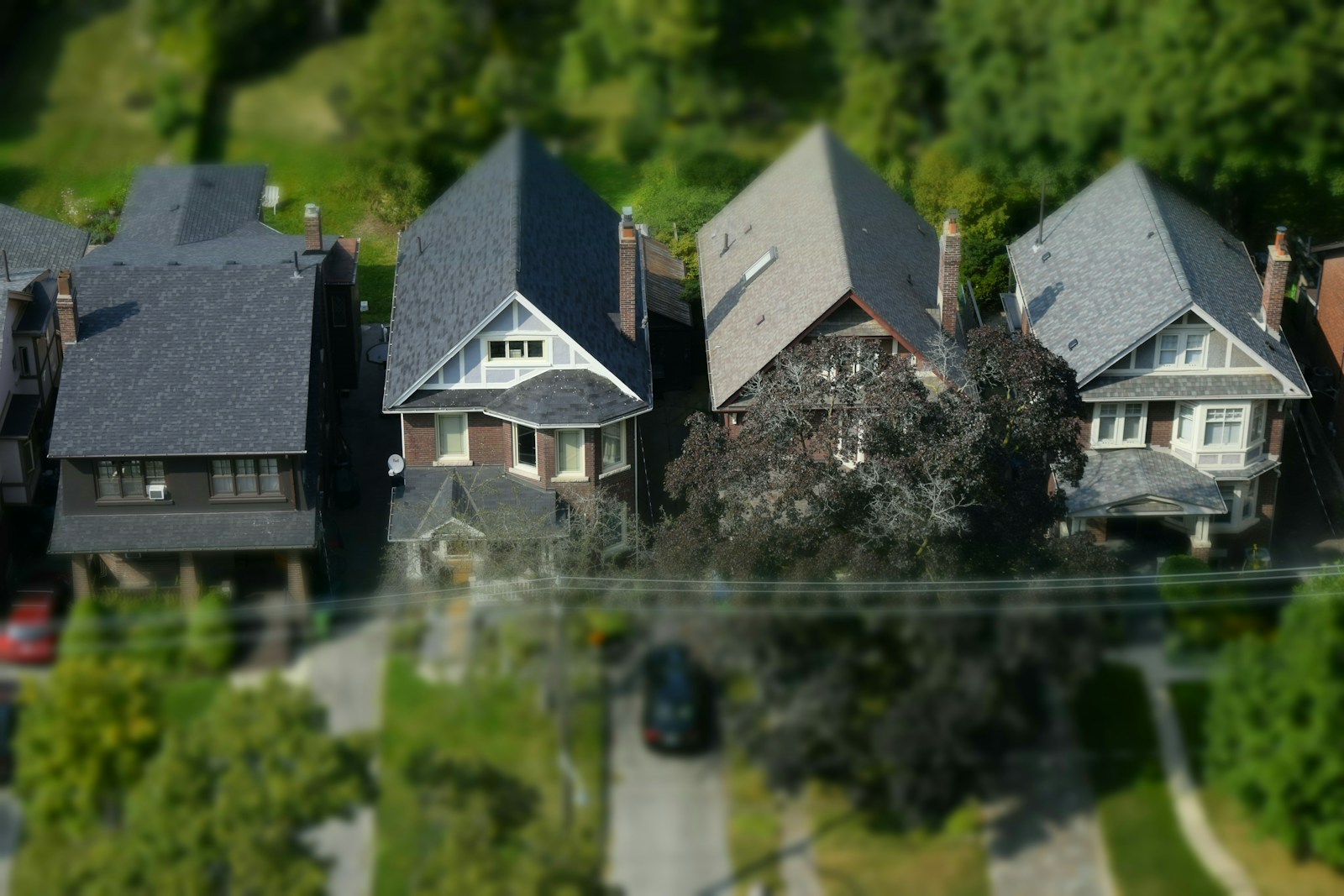
One of the questions homeowners often ask is, “My neighbour just sold for $___ . What does that mean for the value of my home?” It is a perfectly reasonable question. We all pay attention to what is happening around us, especially when we have lived in a neighbourhood for many years. But there is something important to understand when it comes to determining the value of a home.
Your neighbour's sale is a piece of the puzzle. It is not the answer.
I have prepared a number of Comparative Market Analyses recently, and it has been a good reminder of just how much goes into determining a realistic value. Two homes can be the same age, have similar square footage and be only a few doors apart, yet have noticeably different values. Understanding why is one of the most important parts of pricing a home properly.
Here are some of the things I look at.
The highest sale is not necessarily the right comparison
If three similar homes have sold for $600,000, $625,000 and $680,000, it is natural to look at the $680,000 sale and think, “That's what my home should be worth.” But before using that number as a benchmark, it is important to understand why that home achieved $680,000.
Was it extensively renovated? Did it have a larger lot? Was it backing onto greenspace? Was it in exceptional condition? Did it have a particularly desirable location within the community? Did it offer something buyers could not easily find elsewhere?
The highest sale can be useful, but it needs to be understood in context. A comparable property is not simply one that looks similar on paper. The circumstances surrounding the sale matter too.
Sold properties tell us what buyers paid. Active properties tell us what you are competing against.
This is one of the most important distinctions when looking at market information. Sold homes tell us what buyers were actually willing to pay. Active homes tell us what buyers can choose from today. Pending homes can provide another indication of where buyers are responding in the current market.
These are three different pieces of information.
For example, if similar homes recently sold around $625,000 but several comparable homes are now listed around $600,000, a homeowner cannot simply look at the $625,000 sale and assume that is today's value. Buyers are looking at the choices available to them right now.
This is why a proper market analysis needs to consider both what has happened and what is happening.
Square footage matters, but it does not tell the whole story
Price per square foot can be useful when comparing properties, but it has limitations. A 1,700 square foot home is not automatically worth more than a 1,600 square foot home.
How the space is laid out matters.
How the home has been maintained matters.
The lot matters.
The location within the community matters.
A home backing onto greenspace, sitting on a quiet cul de sac, offering a beautiful view or providing exceptional privacy may appeal very differently to buyers than a similar sized home facing a busy road or backing onto another row of houses. This is why price per square foot should be considered as one piece of information rather than the answer to the pricing question.
Condition can make two similar homes very different
This can be difficult for homeowners to assess objectively. You know the improvements you have made. You know how well you have maintained your home and the money you have invested in it.
Buyers see something different.
They are comparing your home with other properties they have viewed, often within a very short period of time. They notice the condition of the flooring, paint, lighting, kitchen, bathrooms, windows, roof, furnace, landscaping and overall presentation. They are also thinking about what they may need to spend after they move in.
That does not mean every home needs to be completely renovated before selling. In many cases, smaller improvements can make more sense than a major renovation. Fresh paint, improved lighting, landscaping, a deep clean and taking care of obvious repairs may improve the overall presentation without requiring a significant investment. The key is understanding what is likely to matter to today's buyers and what may not provide a reasonable return.
Do not overlook the lot and the location within the neighbourhood
When comparing two properties, it is easy to focus on the house itself and overlook the land it sits on.
Are the lots comparable?
Is one a corner lot?
Does one back onto a park or greenspace?
Is one on a quieter street?
Does one offer more privacy?
Are there views?
These differences can influence how buyers compare properties, even when the homes themselves are quite similar. Sometimes the difference is not obvious from the MLS information. It may only become apparent when you look at the property as a buyer would.
Pricing high “just to see what happens” can come at a cost
There is an understandable reason homeowners sometimes want to start high. The thinking is usually, “We can always reduce the price later.” The challenge is that buyers are comparing your home with everything else available at the same time.
When a property first comes on the market, it has an opportunity to attract the attention of buyers who have been watching the area, as well as buyers who are just beginning their search. If the price is significantly higher than comparable choices, buyers may simply move on.
As time passes, a property that has been sitting on the market can begin to raise a different question in a buyer's mind: Why hasn't it sold? A later price reduction can bring renewed attention, but it cannot always recreate the first opportunity a property had when it was new to the market.
Calgary is not one single real estate market
This is particularly important when looking at Calgary.
CREB's August 2026 statistics show that Calgary had 6,526 active residential listings and 1,657 sales during the month, but those overall numbers do not tell the story of every property type or every part of the city. Market conditions can vary considerably between detached homes, row homes and apartment condominiums, as well as between different districts.
So when someone says, “How is the Calgary market?” there really isn't one answer. The market for an apartment condominium is not necessarily behaving like the market for a detached home. A home in northwest Calgary is not necessarily competing with a home in southeast Calgary. And an acreage in Rocky View County certainly should not be evaluated using the same criteria as a suburban Calgary home.
The property needs to be considered within its own market.
So, what is your home actually worth?
A Comparative Market Analysis brings all of these pieces together.
It looks at recent sales, current competition and, where appropriate, pending transactions. It considers the size, age, condition, layout, lot, location and features of the property.
Most importantly, it asks a very practical question:
Where does this home fit among the choices buyers have today?
A CMA is not a guarantee of what a home will sell for, and it is not a replacement for a formal appraisal. It is an informed opinion of where a property fits within the current market based on the available information and the characteristics of the property.
A simple way to think about your home's value
If you are trying to understand what your home might be worth, don't start with the highest sale you can find.
Start with these questions:
What has actually sold?
What is currently competing with my home?
How does my home's condition compare?
What is different about my lot or location?
How does my home compare in size and layout?
What choices does a buyer have today?
Those questions will tell you far more than simply looking at what your neighbour sold for. Every home has its own combination of characteristics, and value is determined by how those characteristics compare with the alternatives buyers have in front of them.
That is why the most useful question isn't “What did my neighbour get?”
It is “How does my home compare with what a buyer can buy today?”
That is where a meaningful understanding of value begins.

Comments:
Post Your Comment: